Inter Agri's farm proves that modern, intensive production can go hand in hand with minimizing emissions, innovation, and a genuine commitment to the idea of Zero Waste.
We don't buy fertilizer, electricity, or coal — and our pigs benefit from a controlled environment in terms of temperature (heating/cooling) and CO₂.
Always one step ahead — what matters is economic pragmatism in genetics selection and feed efficiency (FCR).
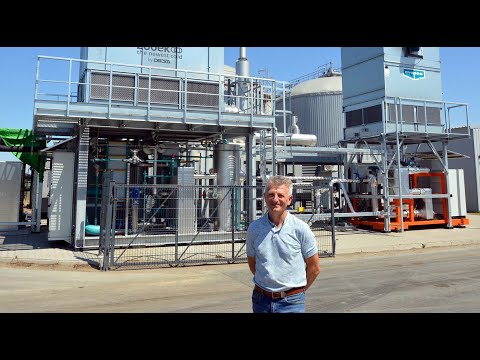
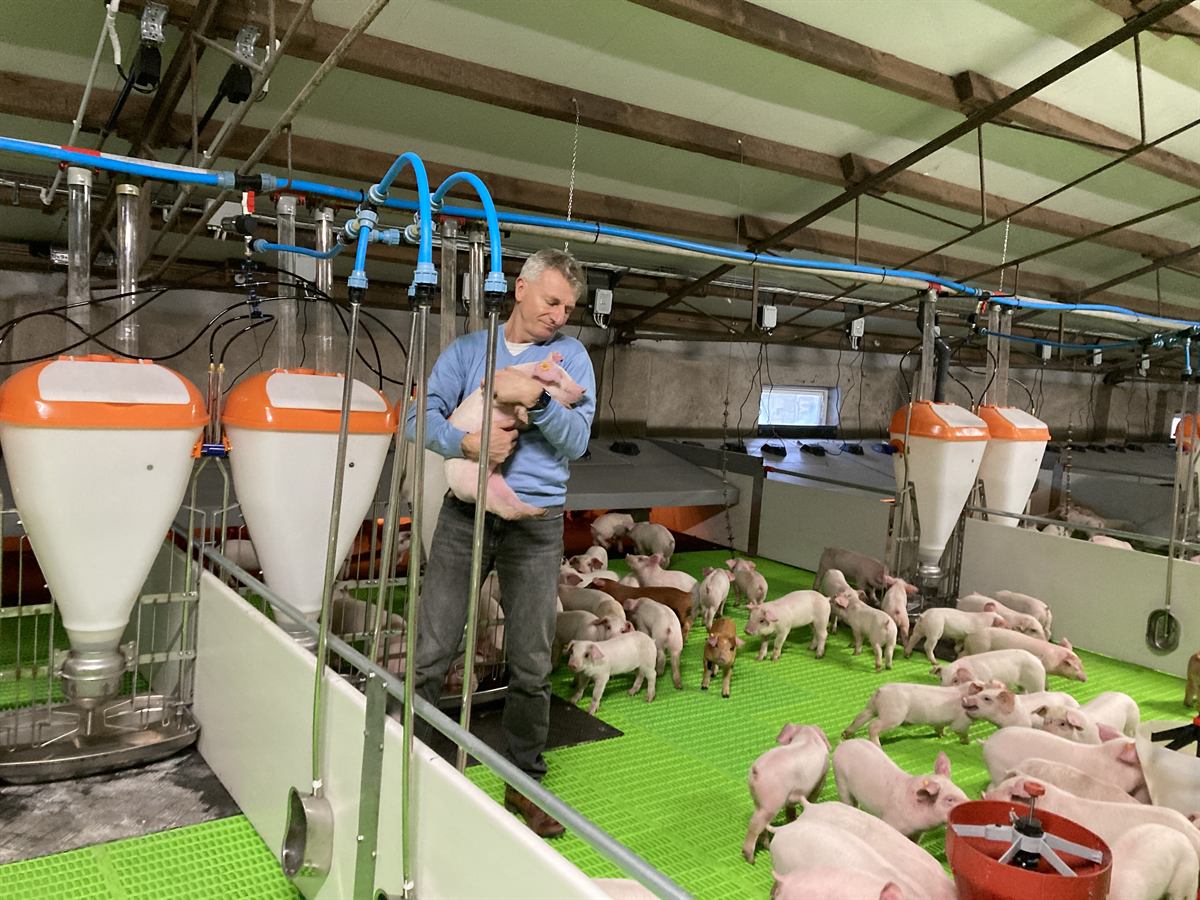
He completed his master's studies at the Agricultural University in Poznań (now the Poznań University of Life Sciences), took part in the Interuniversity Consortium for Agricultural and Related Science in Europe program at the Warsaw University of Life Sciences (SGGW), and in 2011 defended his doctoral thesis at the Poznań University of Life Sciences under the supervision of Prof. Dr. Hab. Jacek Wójtowski, titled "The influence of genotype, sex and slaughter weight on selected meat traits of fatteners." He is also a co-founder of the company NEOROL, serving as its CEO from 1995 to 2004 — as a manager, he was honored with the "Business Gazelle" award for the fastest-growing company in Wielkopolska in 2002. He currently works as an assistant professor at the Poznań University of Life Sciences, in the Department of Animal Breeding and Product Evaluation, Faculty of Veterinary Medicine and Animal Science, and is the initiator and head of the "Piglet Production Academy" project.
He has received numerous honors and awards, including the Bronze Cross of Merit, the "Meritorious for Agriculture" Medal, and the "Eagle of Agribusiness" statuette.
Since 1990 he has run his own farm, "Inter Agri," which became a leader in open-cycle weaner production. Since 2016, he has been the founder, co-owner, and CEO of the family company Inter Agri. A hands-on practitioner with half a century of experience in production, the farm continues the tradition started by his parents, who began with breeding just a handful of sows.
In 2004, Iwona and Janusz Wojtczak became the owners of the manor and park estate in Zawory.
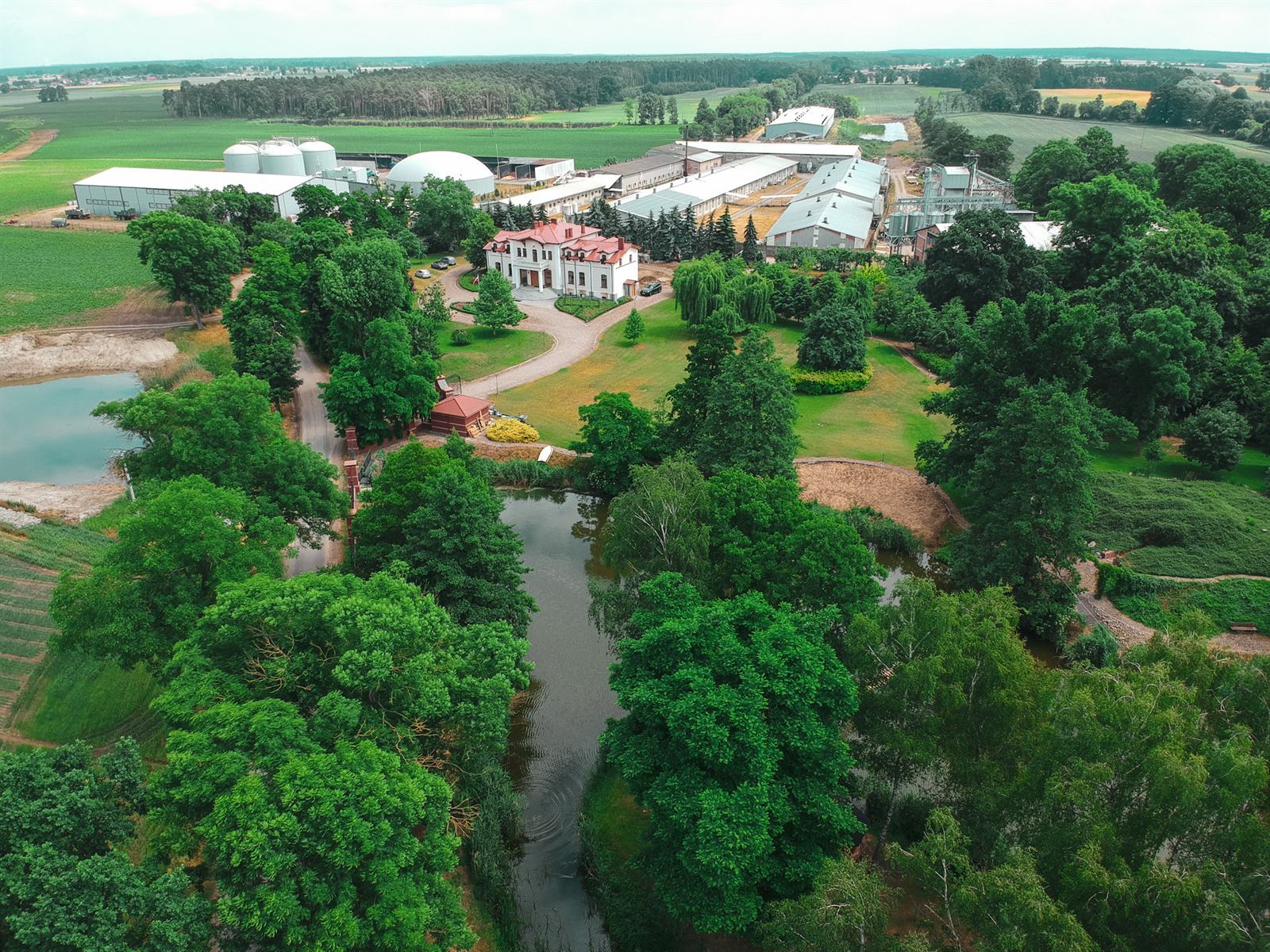
The manor house, the centerpiece of the 3.5-hectare park, was built in the first half of the 19th century by the Chądocki family and rebuilt at the turn of the 19th and 20th centuries by the Raczyński family. Today, the manor and park complex has taken on a new dimension, in line with the "Traditionally Modern" philosophy — eco-friendly lighting and heating have been installed in the manor rooms and park alleys, plant diversity has been expanded (including with the London plane tree), and elements of park and garden fauna have been introduced, such as fallow deer (Dama dama).
The first mention of Zawory dates back to 1397, when the village was owned by Sędziwój Zaworski. Over the following centuries, the estate changed hands many times — passing from the Zaworski family through the Dobczyński, Jaskólecki and Zakrzewski families, to the Chodecki, Masłowski, Życia, Dzierzbicki, Krajewski and Zabłocki families. The oldest surviving description of the manor buildings comes from a document drawn up in 1745 on the occasion of leasing the estate — it lists, among other things, a small manor house, a cowshed, a pigsty, a sheepfold and two granaries.
In 1881, Stefan Raczyński became the owner of Zawory, and the estate remained in his family's hands until the early 20th century. It was the Raczyński family who built the current brick manor house on the site of the earlier buildings and laid out a park with a regular network of avenues and a small pond. By the end of the 19th century the estate covered around 460 hectares — including about 300 ha of arable land, 82 ha of meadows and pastures, and 65 ha of forest — and the farm kept close to 30 horses along with herds of up to 180 head of cattle.
After World War II, the estate was nationalized and for decades operated as an agricultural production cooperative, while the manor and park complex gradually fell into disrepair. In 2004, the manor and park estate was bought back by the Wojtczak family, who carried out its comprehensive revitalization, restoring the manor and its surrounding park to their former splendor — in keeping with the "Traditionally Modern" philosophy.
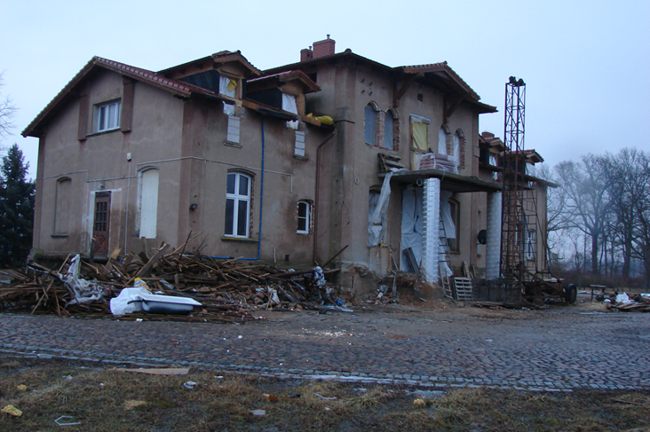
The manor in Zawory — condition until 2015
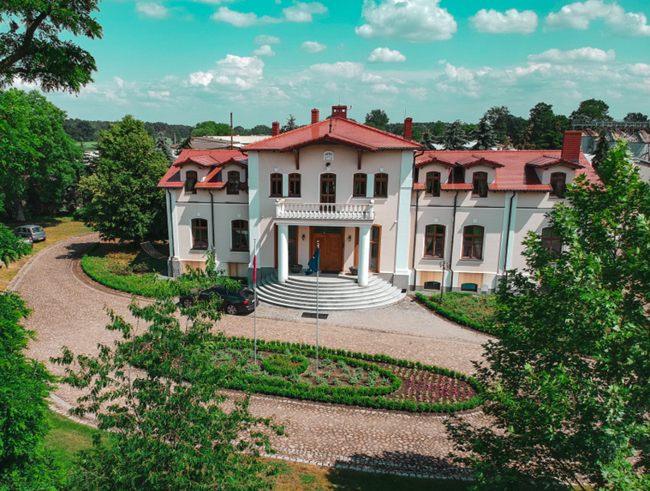
The manor in Zawory — condition after 2017
The breeder takes over a small 16-hectare farm from his father, Tadeusz. The old herd is liquidated, the barn is renovated, and it is restocked with the PIC genotype.
The start of professional production — the herd numbers 60 sows of the PIC Camborough genotype. Opening of a new facility in Golina, the first farm of the Wojtczak family.
Further facilities in Lubinia Mała and Zawory. Production grows to 706 sows after the launch of the purchased facility in Zawory.
The Wojtczak family becomes the owners of the manor and park estate in Zawory.
The family company Inter Agri Sp. z o.o. is formed from three family farms — enabling easier and more efficient management of a growing enterprise, legally clarified succession rules, and the entry of Bartosz Wojtczak, a graduate of the Faculty of Economics at the Poznań University of Economics and Business, as a Board Member and guarantor of smooth family succession.
Weaner-rearing and fattening facilities are built in Gola and Łężek. The core herd grows to 2,300 sows, and annual weaner sales reach nearly 60,000 per year.
An agricultural biogas plant with a capacity of almost 1 MW of electricity is put into operation, together with a Combined Chilled Water Unit — converting waste heat into technological cooling used both in weaner production and in vegetable storage.
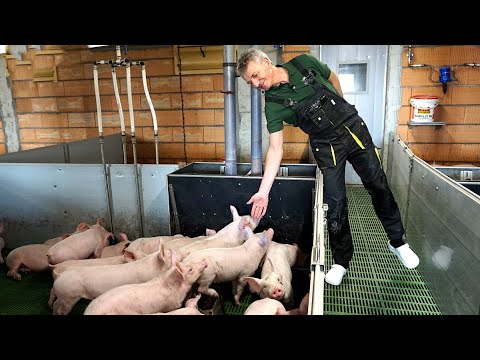
…what matters is economic pragmatism in genetics selection and feed efficiency (FCR)…
The company's activities cover both animal and crop production. The main reason for changing the legal form to a commercial company was to enable easier and more efficient management of an increasingly large and growing enterprise, along with legally clarified succession rules.
See how we combine tradition with modern solutions in weaner production, energy, and crop farming.
Go to technologies